
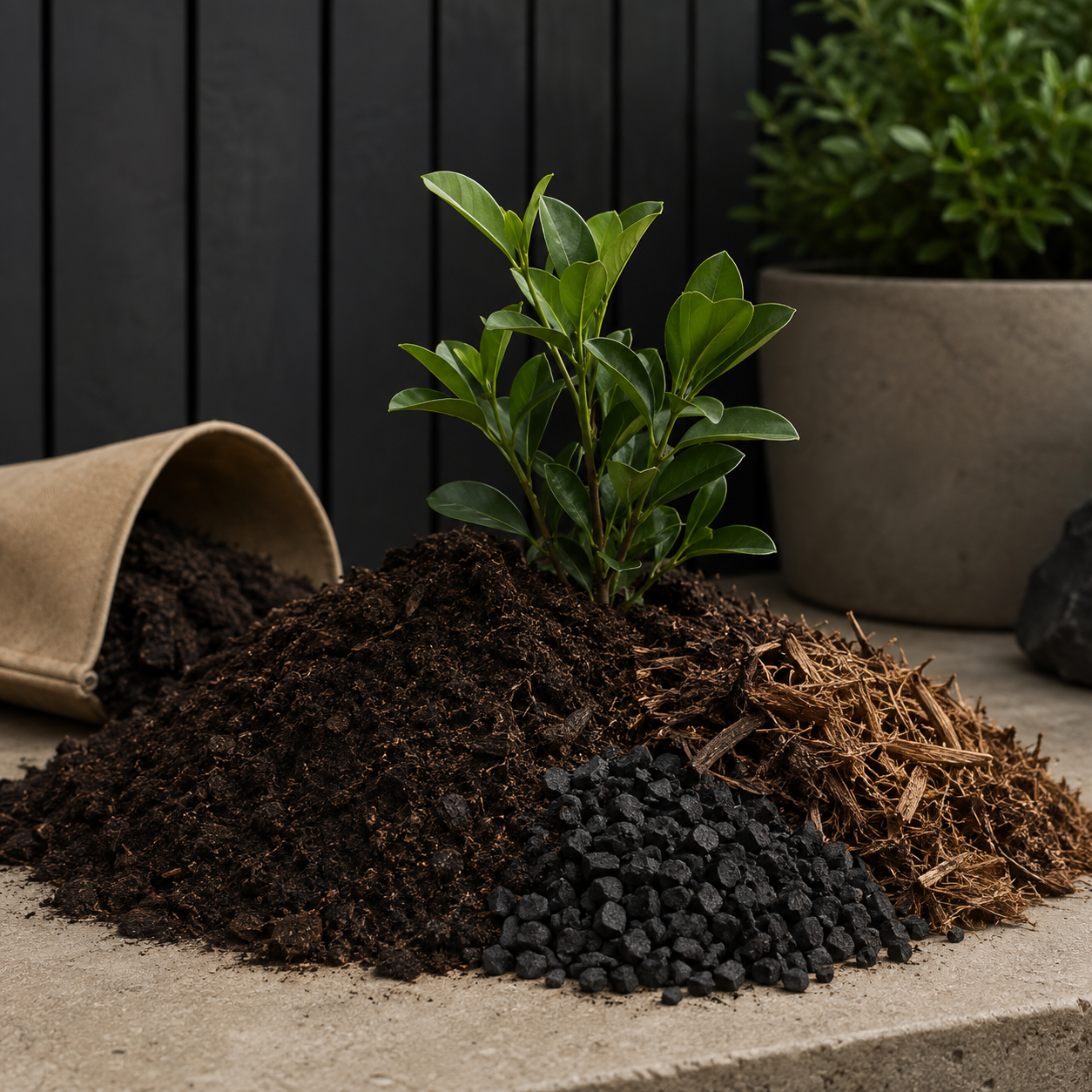
Soil, compost and mulch are often discussed as though they are interchangeable. They are not. Using the wrong material in the wrong layer can cause settlement, poor drainage, nutrient problems, waterlogging, plant stress and unnecessary replacement work.
Soil provides the growing structure
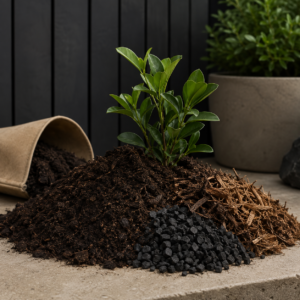
Soil or a designed growing medium must physically support roots while holding both water and air. Its texture, organic content, drainage behaviour, pH, contamination status and consistency should suit the intended plants and installation depth. A garden soil suitable for raised beds may not meet a lawn specification, structural planting requirement or engineered podium-load limit.
Compost is an amendment
Mature compost adds stabilised organic matter and can improve biological activity, moisture retention and nutrient availability. It is normally blended into an appropriate soil or used as a controlled surface amendment. Filling a deep garden bed with compost alone can create excessive settlement and unsuitable nutrient or moisture conditions.
Mulch protects the surface
Mulch sits on top of the soil. It helps reduce evaporation, moderate temperature, limit erosion and suppress some weed germination. Organic mulches gradually break down and need replenishment. Mineral mulches behave differently and can increase heat or migrate if the edge and gradient are poorly designed.
Common mistakes to avoid
- Ordering by product name without checking composition and intended use.
- Ignoring existing subsoil drainage and expecting imported soil to solve waterlogging.
- Placing mulch against trunks, stems, cladding, drainage openings or termite inspection zones.
- Using uncomposted or unstable organic material that heats, shrinks or ties up nitrogen.
- Failing to allow for settlement when setting finished levels.
- Applying one product across lawn, trees, vegetables and ornamental planting without checking different needs.
Order by volume and verify access
Calculate the net volume from area multiplied by compacted depth, then allow for realistic settlement and site wastage. Confirm whether the supplier quantity is loose, bagged or compacted volume. Check truck access, unloading location, wheelbarrow distance, contamination controls and whether material will block other trades or public access.
What ONZKO needs for a useful recommendation
Provide the project location, measured area, target depth, existing soil condition, drainage observations, intended plants or turf, access constraints and any project specification. Laboratory testing may be necessary for higher-risk, commercial, food-growing or specification-controlled work.
Source note: Rocky Point’s public guidance on garden soil, compost and mulch informed the practical distinctions in this article. It does not confirm that a specific Rocky Point product is available through ONZKO or suitable for a New Zealand project.