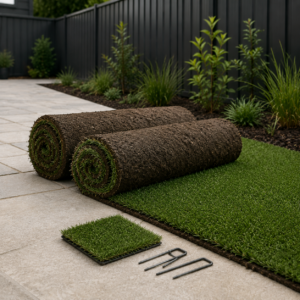

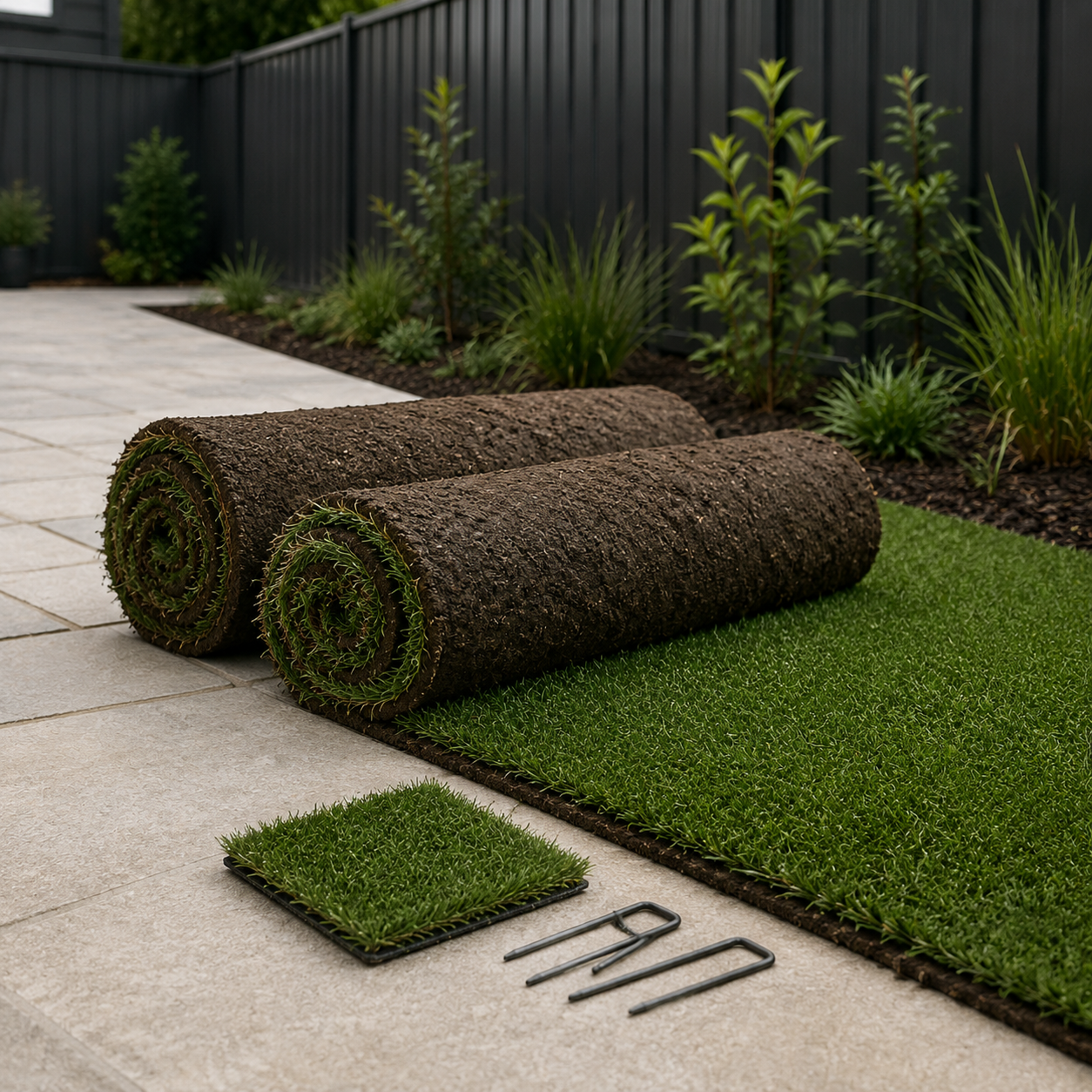
Artificial lawn can be a sensible solution, but it is not automatically the best lawn for every site. The correct decision depends on shade, wear, drainage, pets, maintenance capacity, appearance expectations, installation cost and what will happen at the end of the product’s life.
Where artificial lawn can work well
- Small areas where mowing access is awkward.
- Heavily shaded spaces where suitable natural turf struggles.
- Display, rooftop or courtyard areas needing consistent visual presentation.
- Sites where routine mowing and fertilising labour is difficult to provide.
- High-use zones where the selected system and base are designed for the expected traffic.
The main benefits
Artificial lawn does not need mowing, fertiliser or routine irrigation for growth. It provides consistent colour and can reduce mud tracking where the drainage base is correctly designed. It can also establish an immediate finished appearance rather than waiting for live turf to root and recover.
The trade-offs people underestimate
- Heat: synthetic surfaces can become hot in direct sun.
- Drainage: water still needs a properly graded, free-draining path away from structures.
- Cleaning: leaves, dust, spills and pet contamination require removal and periodic cleaning.
- Wear and movement: pile can flatten, joins can fail and poorly compacted bases can settle.
- Weeds: weeds can establish at edges, through wind-blown material or where detailing is weak.
- Replacement: artificial turf has a finite service life and end-of-life disposal must be considered.
What natural turf provides
Natural turf can cool the immediate environment, absorb rainfall, support soil processes and repair itself when the grass species and growing conditions are suitable. Lawn Solutions Australia’s technical material highlights benefits including runoff reduction, erosion control and reduced heat-island effects. Those benefits come with mowing, irrigation during establishment and dry periods, nutrition, weed control and renovation requirements.
Compare whole-of-life cost
Do not compare only the supply price per square metre. Include excavation, disposal, base preparation, drainage, edging, joins, access, establishment, maintenance, repair and eventual replacement. A cheap artificial product over a weak base can become more expensive than a well-selected natural lawn. A high-maintenance grass in the wrong climate can fail for the opposite reason.
Before requesting a quote
Provide area measurements, levels, photos, sun exposure, soil and drainage conditions, expected traffic, pets, access width and the required finish at paths, drains and garden edges. ONZKO can then assess whether artificial lawn, natural turf or a mixed solution is the more defensible choice.
Source note: Lawn Solutions Australia’s public turf guidance informs the natural-turf side of this comparison. Product availability, installation design and local suitability must be confirmed for each project.